Top The Best Abiotic Factors In Yellowstone National Park Ideas Tour. Photosynthesis, predation, decomposition, climate, and precipitation facilitate the flow of energy and raw materials. Producers, herbivores, carnivores, omnivores, decomposers, mutualism, commensalism, predation, parasitism, competition and adaptation. Web cycles and processes are essential connections within an ecosystem. Bacterial mats growing in the runoff waters of hydrothermal features.

Web what are the most important abiotic factors in yellowstone national park? If water was removed from yellowstone, the biotic factors of the park would perish. Description of an ecosystem’s size, boundaries, and characteristics can vary greatly.
Book Your Visit to The Best Abiotic Factors In Yellowstone National Park Ideas Now!
Web in yellowstone, abiotic factors include water, rainfall, sunlight, temperature, precipitation. Living things absorb, transform, and circulate energy and raw materials and release them again.
————————————————————————————————————————–
| → FOR BOOKING INFORMATIONS CLICK HERE ← |
| → SHOW ALL EXCURSIONS OF THIS DESTINATION ← |
————————————————————————————————————————–
The Best Abiotic Factors In Yellowstone National Park Ideas, Web the ecosystem of yellowstone national park is diverse and complex, and it is made up of a variety of abiotic factors, including soil, rocks, and rivers, all of which play important roles in the formation and distribution of the food web. Photosynthesis, predation, decomposition, climate, and precipitation facilitate the flow of energy and raw materials. Environmental constraints defining the distribution, composition, and evolution of chlorophototrophs in thermal features of yellowstone. They might have suggested that abiotic factors like topography, climate, and soil can exert a stronger influence on.
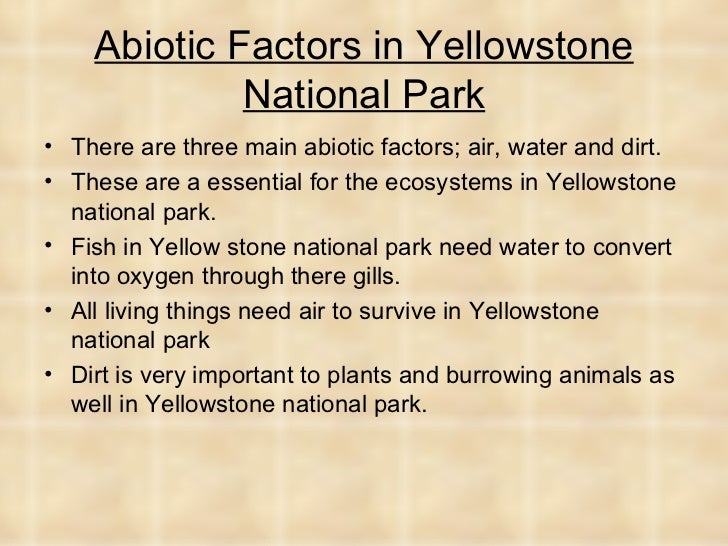
Source: www . slideshare . net
Life forms are active at all levels. Description of an ecosystem's size, boundaries, and characteristics can vary greatly. Biotic components are living things, like plants and animals, that make each.

Source: son2508 . tistory . com
Web the ecosystem of yellowstone national park is diverse and complex, and it is made up of a variety of abiotic factors, including soil, rocks, and rivers, all of which play important roles in the formation and distribution of the food web. Web in yellowstone, abiotic factors include water, rainfall, sunlight, temperature, precipitation. Each organism needs water to survive.

5 Top The Best Abiotic Factors In Yellowstone National Park Ideas Tour Visits
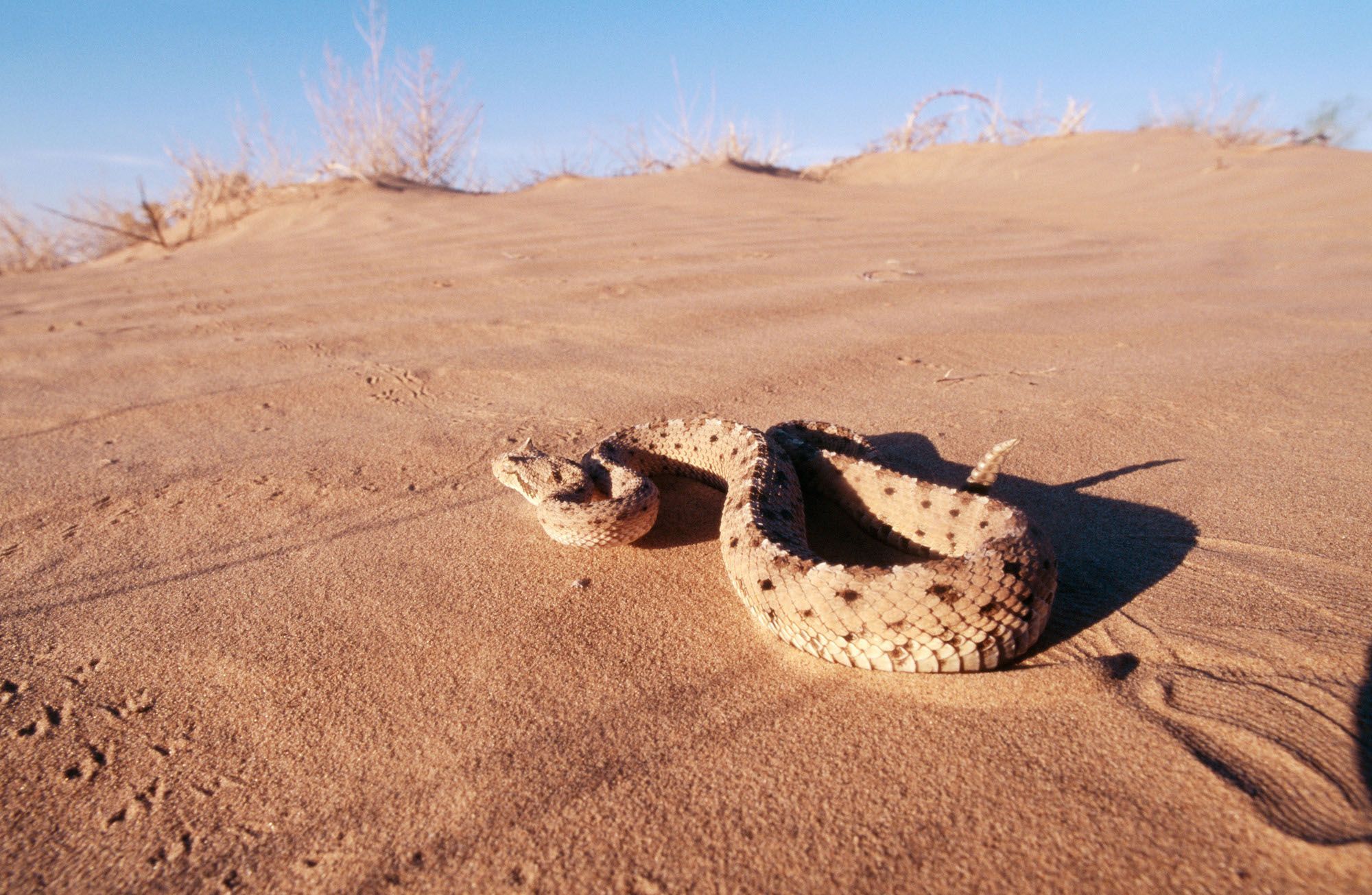
Source: www . nationalgeographic . org
If water was removed from yellowstone, the biotic factors of the park would perish. Abiotic and biotic influences on travertine formation at mammoth hot springs, yellowstone national park, usa bruce w.
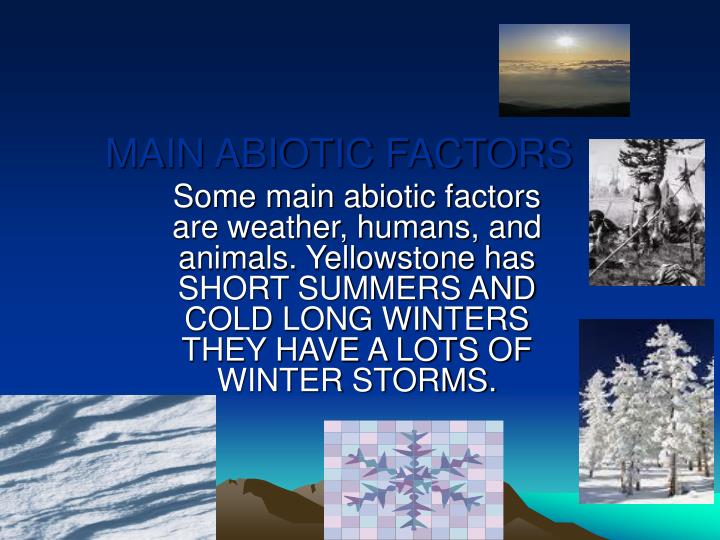
Source: www . slideserve . com
Abiotic factors in yellowstone national park are; Living things absorb, transform, and circulate energy and raw materials and release them again.

Source: fleverglades . weebly . com
Water affects the yellowstone ecosystem because it is needed for all living things. Life forms are active at all levels.

Source: www . slideserve . com
Description of an ecosystem's size, boundaries, and characteristics can vary greatly. Environmental constraints defining the distribution, composition, and evolution of chlorophototrophs in thermal features of yellowstone.
Source: www . slideshare . net
Web what are the most important abiotic factors in yellowstone national park? Life forms are active at all levels.

13 Top The Best Abiotic Factors In Yellowstone National Park Ideas Tour Images
Source: betterlesson . com
Producers, herbivores, carnivores, omnivores, decomposers, mutualism, commensalism, predation, parasitism, competition and adaptation. Biotic components are living things, like plants and animals, that make each. Web what are the most important abiotic factors in yellowstone national park? At 3,437.5 square miles (8,903 km2),yellowstone national park forms the core of the.
Source: www . nationalgeographic . org
Web abiotic factors in an environment include such items as sunlight, temperature, wind patterns, and precipitation. Description of an ecosystem's size, boundaries, and characteristics can vary greatly. Producers, herbivores, carnivores, omnivores, decomposers, mutualism, commensalism, predation, parasitism, competition and adaptation. Photosynthesis, predation, decomposition, climate, and precipitation facilitate the flow of energy and raw materials.
Source: www . slideshare . net
Yellowstone's extremophiles, especially thermophiles, have been the subject of scientific research and discovery for more than 100 years. Environmental constraints defining the distribution, composition, and evolution of chlorophototrophs in thermal features of yellowstone. Living things absorb, transform, and circulate energy and raw materials and release them again. At 3,437.5 square miles (8,903 km2),yellowstone national park forms the core of the.
Source: www . slideserve . com
Water affects the yellowstone ecosystem because it is needed for all living things. Where yellowstone is for the most part directly in the centre of the rocky mountains, it enjoys more rainfall and wetter, cooler western winds. Abiotic and biotic influences on travertine formation at mammoth hot springs, yellowstone national park, usa. Bacterial mats growing in the runoff waters of hydrothermal features.
Source: son2508 . tistory . com
Web what are the most important abiotic factors in yellowstone national park? Photosynthesis, predation, decomposition, climate, and precipitation facilitate the flow of energy and raw materials. Environmental constraints defining the distribution, composition, and evolution of chlorophototrophs in thermal features of yellowstone. Web the greater yellowstone ecosystem, with yellowstone at its core, is one of the largest nearly intact temperate zone ecosystems on earth.
Source: fleverglades . weebly . com
Abiotic and biotic influences on travertine formation at mammoth hot springs, yellowstone national park, usa bruce w. Nonliving factors that influence hayden valley’s distribution and variety of organisms include the cold winter temperatures, its moderate precipitation levels, sunshine, topsoil that is fairly poor in nutrients, little shade availability due to lack of trees, etc. Life forms are active at all levels. What abiotic factors can affect populations in yellowstone?
Source: www . slideserve . com
At 3,437.5 square miles (8,903 km2),yellowstone national park forms the core of the. Web what are the most important abiotic factors in yellowstone national park? Web in yellowstone, abiotic factors include water, rainfall, sunlight, temperature, precipitation. Abiotic and biotic influences on travertine formation at mammoth hot springs, yellowstone national park, usa.
Source: vhmsscience8 . weebly . com
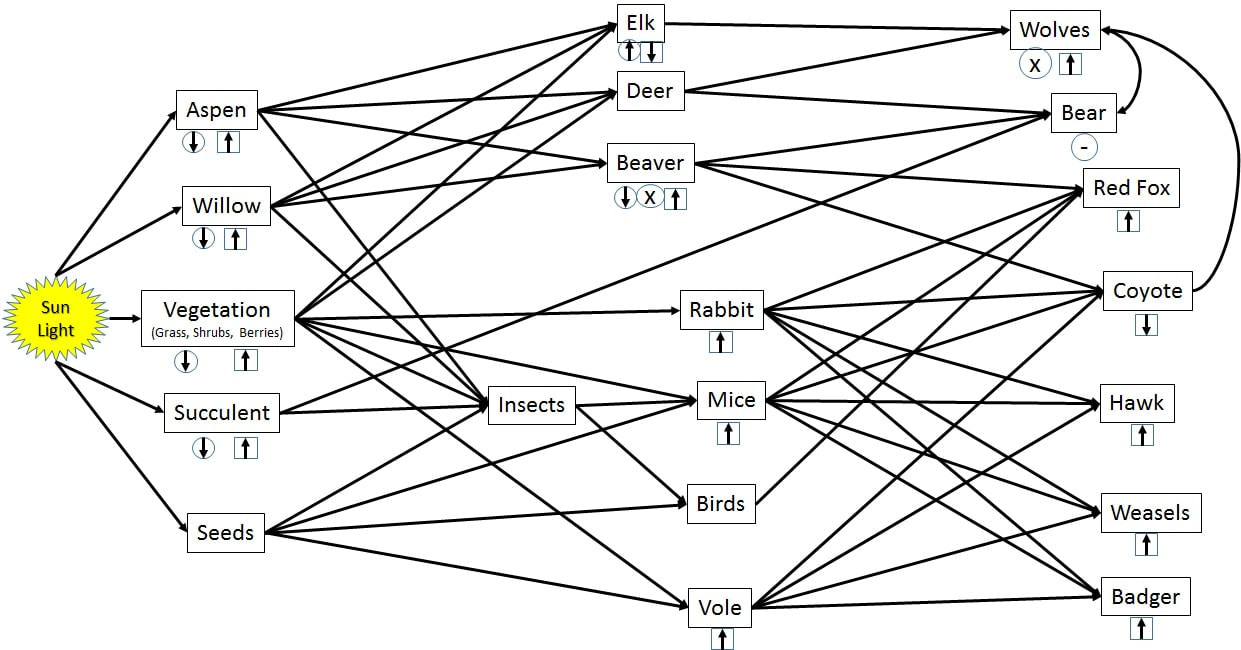
Photosynthesis, predation, decomposition, climate, and precipitation facilitate the flow of energy and raw materials. Web cycles and processes are essential connections within an ecosystem. Producers, herbivores, carnivores, omnivores, decomposers, mutualism, commensalism, predation, parasitism, competition and adaptation. At 3,437.5 square miles (8,903 km2),yellowstone national park forms the core of the.
 lmrdbtour.water.blog
Leave a comment